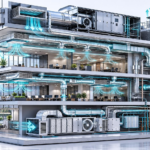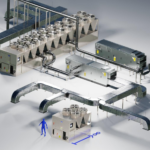
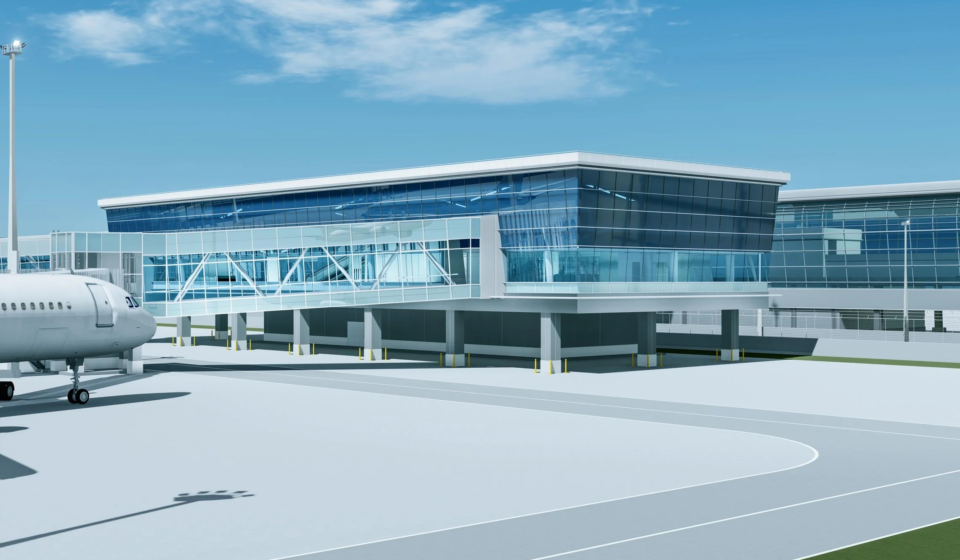

HVAC Solutions for Airports: Complete Guide to Airport HVAC Design, Chiller Systems, AHU and Ventilation
Advanced HVAC Systems for Airport Terminals, Passenger Lounges, Control Buildings and Aviation Infrastructure
Airports are among the most complex commercial infrastructure facilities in the world. They operate for extended hours, accommodate thousands of passengers and employees, and contain multiple areas with different heating, ventilation and air conditioning requirements.
From passenger terminals and departure lounges to immigration counters, baggage handling areas, airport offices, restaurants and technical rooms, every space requires an appropriate HVAC solution.
Unlike conventional commercial buildings, airports experience significant variations in passenger occupancy, outdoor air infiltration, equipment heat loads and operational schedules. These conditions make airport HVAC engineering a specialised and important part of airport infrastructure development.
A properly designed HVAC System for Airports helps maintain passenger comfort, indoor air quality, temperature stability, ventilation and energy-efficient building operation.
VIPUL HVAC SOLUTION PVT. LTD. provides HVAC consultancy and mechanical building-service solutions, including VRF/VRV air conditioning systems, central chiller plants, Air Handling Units (AHUs), ductable AC, cassette AC, fresh-air ventilation and industrial HVAC solutions.
This comprehensive guide explains airport HVAC systems, their major components, different air conditioning technologies, ventilation requirements, equipment selection, energy efficiency and important engineering considerations for modern airport buildings.
What Are HVAC Solutions for Airports?
HVAC solutions for airports involve the design, engineering, installation and maintenance of heating, ventilation and air conditioning systems for airport infrastructure.
The main objective is to maintain suitable indoor environmental conditions while accommodating changing passenger occupancy, operational schedules and building requirements.
Airport HVAC systems may include:
- Central air conditioning systems.
- Air-cooled and water-cooled chiller plants.
- Air Handling Units (AHUs).
- Variable Air Volume (VAV) systems.
- VRF and VRV air conditioning systems.
- Fan Coil Units (FCUs).
- Ductable air conditioning systems.
- Fresh-air ventilation systems.
- Exhaust ventilation systems.
- Air filtration systems.
- Building Management Systems (BMS).
- HVAC automation and temperature controls.
The appropriate HVAC configuration depends on terminal size, passenger capacity, building architecture, climate, operating schedules, occupancy patterns and energy-performance objectives.
Why Is a Professional HVAC System Important for Airports?
Airport buildings require reliable air conditioning and ventilation because they accommodate large numbers of people and operate under changing environmental and operational conditions.
A properly designed HVAC system provides several important benefits.
1. Passenger Comfort
Passengers spend time in check-in areas, waiting lounges, departure halls, arrival areas, restaurants and other airport facilities.
Proper temperature control and air distribution help maintain comfortable indoor conditions throughout these spaces.
2. Indoor Air Quality
Airport terminals experience high passenger movement and changing occupancy.
Fresh-air ventilation and appropriate filtration help manage indoor air quality by supplying outdoor air and controlling airborne particles.
3. Temperature and Humidity Control
Airport HVAC systems should maintain suitable temperature and humidity conditions in different building zones.
This is important for passenger comfort, electronic equipment, baggage systems and other airport operations.
4. Energy Efficiency
Large airport terminals have substantial cooling requirements because of their size, occupancy, lighting, equipment and outdoor air loads.
Energy-efficient HVAC equipment and intelligent controls can help reduce unnecessary electricity consumption.
5. Operational Reliability
Airports have critical operating schedules. Unexpected HVAC breakdowns can create passenger discomfort and operational difficulties.
Equipment selection should consider reliability, maintenance access, redundancy and the availability of backup arrangements where required.
Major Components of an Airport HVAC System
An airport HVAC system consists of multiple mechanical components that work together to maintain the required indoor conditions.
1. Central Chiller Plant System
Central chiller plants are commonly considered for large airport terminals requiring substantial cooling capacity.
A chiller produces chilled water, which is circulated through a piping network to AHUs and FCUs.
The AHUs and FCUs use this chilled water to cool the air supplied to different airport areas.
There are two common chiller configurations.
Air-Cooled Chiller System
An air-cooled chiller rejects heat directly to outdoor air.
It may be suitable for airport projects where cooling-tower installation or associated water systems are not preferred.
Water-Cooled Chiller System
A water-cooled chiller rejects heat through a cooling-water circuit connected to a cooling tower.
It may be suitable for large airport facilities where site conditions, water availability and operating requirements support this configuration.
Important chiller plant components include:
- Chiller units.
- Chilled-water pumps.
- Cooling-water pumps, where applicable.
- Cooling towers for water-cooled systems.
- Expansion tanks.
- Chilled-water piping.
- Control valves.
- Temperature sensors.
- Pressure sensors.
- Air Handling Units.
- Building automation controls.
Airport chiller design considerations:
- Total building cooling load.
- Passenger occupancy.
- Outdoor temperature and humidity.
- Solar heat gain.
- Equipment heat generation.
- Chiller efficiency.
- Part-load performance.
- Pump selection.
- Cooling-tower capacity.
- Plant-room accessibility.
- Equipment redundancy.
- Maintenance requirements.
2. Air Handling Unit (AHU) System
Air Handling Units are among the most important components of airport HVAC systems.
An AHU conditions and circulates air through filters, cooling coils, fans and other mechanical components.
Airport AHUs are commonly used in:
- Passenger terminals.
- Departure lounges.
- Arrival halls.
- Check-in areas.
- Immigration areas.
- Airport offices.
- Restaurants.
- Retail spaces.
- Conference facilities.
Typical AHU components include:
- Fresh-air intake.
- Pre-filters.
- Fine filters.
- Cooling coils.
- Heating coils where required.
- Supply-air fans.
- Return-air sections.
- Dampers.
- Drain pans.
- Temperature sensors.
- Humidity sensors.
- Control systems.
Important AHU design considerations:
- Required airflow in CFM or m³/hr.
- Cooling-coil capacity.
- External static pressure.
- Filter efficiency.
- Fresh-air requirements.
- Fan selection.
- Noise and vibration.
- Duct connections.
- Condensate drainage.
- Maintenance accessibility.
Correct AHU selection helps maintain appropriate air distribution and indoor environmental conditions throughout the airport terminal.
3. Variable Air Volume (VAV) System
Variable Air Volume systems are widely used in large commercial buildings and are particularly relevant to airport terminal applications.
A VAV system adjusts the supply airflow according to the cooling demand of individual zones.
For example, the check-in area may experience high occupancy during peak travel periods, while an administrative office may have relatively stable occupancy.
VAV systems can help regulate airflow according to changing zone requirements while maintaining the required ventilation.
Benefits of VAV systems:
- Independent zone airflow control.
- Better response to changing cooling loads.
- Flexible temperature management.
- Integration with building automation.
- Potential energy savings through demand-based operation.
VAV systems should be designed with suitable minimum ventilation rates, control sequences and airflow balancing.
4. VRF and VRV Air Conditioning Systems
VRF (Variable Refrigerant Flow) and VRV (Variable Refrigerant Volume) systems are air conditioning technologies that provide variable refrigerant flow to multiple indoor units.
They can be considered for selected airport spaces that require independent temperature control.
Typical applications include:
- Airport administrative offices.
- Staff rooms.
- Meeting rooms.
- Airport management offices.
- Retail shops.
- Commercial spaces.
- Small operational buildings.
Advantages of VRF/VRV systems:
- Individual zone temperature control.
- Flexible indoor-unit configurations.
- Variable-capacity operation.
- Space-efficient installation.
- Centralised control options.
VRF/VRV system selection should consider cooling load, refrigerant piping limitations, outdoor-unit locations, electrical requirements, condensate drainage and maintenance accessibility.
5. Ductable Air Conditioning System
Ductable AC systems distribute conditioned air through a duct network.
They may be used in suitable airport offices, meeting rooms, restaurants and commercial spaces.
Important design considerations include:
- Cooling-load calculation.
- Duct sizing.
- Airflow requirements.
- Static pressure.
- Supply-air diffusers.
- Return-air arrangements.
- Duct insulation.
- Noise control.
- Air balancing.
6. Fresh-Air Ventilation System
Fresh-air ventilation is essential in airport terminals because of high passenger occupancy and continuous movement.
A properly designed ventilation system supplies outdoor air to occupied spaces and helps manage indoor air quality.
Fresh-air ventilation may be required in:
- Departure lounges.
- Arrival halls.
- Check-in counters.
- Immigration areas.
- Security waiting areas.
- Airport offices.
- Restaurants.
- Passenger waiting areas.
The design should consider passenger density, occupancy schedules, outdoor air quality, ventilation rates, filtration and exhaust arrangements.
7. Exhaust Ventilation System
Exhaust systems remove unwanted air, odours, heat and contaminants from selected airport spaces.
Common applications include:
- Public toilets.
- Airport kitchens.
- Restaurants.
- Utility rooms.
- Electrical rooms, where required.
- Generator rooms.
- Maintenance workshops.
- Vehicle-related service areas.
Exhaust air should be discharged at suitable locations to prevent undesirable re-entry into fresh-air intakes or occupied areas.
8. Building Management System (BMS)
A Building Management System provides centralised monitoring and control of airport HVAC equipment.
A BMS can monitor:
- Chiller operating status.
- AHU operating status.
- Supply-air temperature.
- Return-air temperature.
- Chilled-water temperature.
- Pump operation.
- Fan operation.
- Filter differential pressure.
- Room temperature.
- Humidity.
- Equipment alarms.
- Energy consumption.
- Operating schedules.
BMS integration helps facility-management teams monitor system performance and identify abnormal operating conditions.
HVAC Solutions for Different Areas of Airports
Different airport departments have different air conditioning and ventilation requirements. The HVAC design should be developed according to the function and occupancy of each area.
1. Passenger Terminal HVAC System
Passenger terminals are among the largest and most heavily occupied airport spaces.
They generally contain check-in counters, waiting areas, departure lounges, arrival halls, retail outlets and other passenger facilities.
Important HVAC requirements include:
- Central air conditioning.
- Suitable fresh-air supply.
- AHU-based air distribution.
- Temperature control.
- Humidity management.
- Air filtration.
- Zoning.
- Occupancy-responsive controls.
2. Departure Lounge HVAC System
Departure lounges experience changing passenger occupancy depending on flight schedules.
The HVAC design should consider:
- Variable passenger loads.
- Continuous ventilation.
- Temperature control.
- Air distribution.
- Outdoor-air requirements.
- Equipment heat loads.
- Flexible operating schedules.
3. Arrival Hall HVAC System
Arrival halls accommodate passengers, visitors and airport employees.
Important HVAC considerations include:
- Passenger occupancy.
- Entrance air infiltration.
- Door-opening frequency.
- Fresh-air ventilation.
- Cooling capacity.
- Air distribution.
4. Check-In Counter HVAC System
Check-in areas experience concentrated passenger activity and heat generation from computers, baggage scales and other equipment.
HVAC design should account for:
- Occupant heat load.
- Equipment heat load.
- Cooling requirements.
- Fresh-air supply.
- Air distribution.
- Operating schedules.
5. Immigration and Security Areas
Immigration and security areas may experience high passenger density during peak periods.
The HVAC system should provide suitable ventilation and temperature control based on actual occupancy and operating requirements.
6. Airport Offices and Administrative Buildings
Administrative buildings generally have more predictable occupancy schedules than passenger terminals.
VRF/VRV systems, ductable AC, cassette AC and central AHU-based systems may be considered according to building size and usage.
7. Airport Restaurants and Food Courts
Restaurants and food courts require air conditioning along with dedicated kitchen ventilation and exhaust arrangements.
Important design considerations include:
- Dining-area cooling.
- Fresh-air supply.
- Kitchen exhaust.
- Make-up air.
- Odour control.
- Heat removal.
- Suitable air distribution.
Kitchen exhaust systems should be designed according to applicable fire-safety and mechanical ventilation requirements.
8. Baggage Handling Areas
Baggage handling areas contain mechanical equipment, conveyors and operational machinery that may generate heat.
HVAC requirements should consider:
- Equipment heat loads.
- Worker occupancy.
- Ventilation.
- Air distribution.
- Equipment-room conditions.
- Maintenance requirements.
9. Airport Cargo Buildings
Cargo buildings may require ventilation and temperature control depending on the type of goods being handled.
Specialised storage areas may require dedicated environmental controls for temperature-sensitive cargo.
10. Airport Technical and Server Rooms
Technical rooms, communication rooms and server rooms may contain equipment that generates continuous heat.
They may require dedicated cooling, equipment monitoring and backup arrangements according to their operational criticality.
11. Airport Control and Support Buildings
Administrative, operational and technical support buildings require HVAC systems selected according to their occupancy, equipment loads and operational schedules.
How to Calculate Cooling Load for Airport HVAC Systems?
Cooling-load calculation is one of the most important stages in airport HVAC design.
Airport terminals have complex heat loads because of passenger occupancy, large glass façades, lighting, baggage equipment and outdoor-air infiltration.
Important cooling-load factors include:
- Total building area.
- Passenger occupancy.
- Airport employee occupancy.
- Outdoor temperature and humidity.
- Solar heat gain through glass.
- Building orientation.
- Lighting load.
- Electronic equipment load.
- Baggage handling equipment.
- Fresh-air ventilation requirements.
- Door-opening and infiltration loads.
- Operating schedules.
Example of Airport HVAC Cooling Load Assessment
Suppose an airport terminal has:
- Total conditioned area: 20,000 square metres.
- High passenger occupancy.
- Large glazed façades.
- Multiple check-in counters.
- Retail and food court areas.
- Continuous operating schedules.
The HVAC engineer must evaluate:
- External heat gain.
- Solar radiation.
- Occupant sensible and latent heat.
- Lighting heat load.
- Equipment heat load.
- Outdoor-air ventilation load.
- Infiltration load.
- Supply-air requirements.
The final cooling capacity should be determined through detailed engineering calculations and appropriate simulation where necessary.
Important: Airport HVAC capacity should not be estimated using a simple tonnage-per-square-metre formula. Passenger occupancy, outdoor-air requirements and changing operational loads must be evaluated carefully.
Energy-Efficient HVAC Solutions for Airports
Airport terminals can have substantial energy requirements because of their large conditioned spaces, continuous operating schedules and changing passenger occupancy.
Energy-efficient HVAC design can help reduce operating costs and improve building performance.
1. High-Efficiency Chiller Selection
Select chillers based on actual cooling requirements, operating schedules and part-load performance.
2. Variable Frequency Drives
VFDs can adjust fan and pump speeds according to system demand, where suitable for the design.
3. Occupancy-Based HVAC Controls
Passenger occupancy can vary significantly throughout the day.
Suitable occupancy-responsive control strategies can help adjust cooling and airflow in appropriate zones while maintaining required ventilation and comfort conditions.
4. VAV Air Distribution
Variable Air Volume systems can help regulate airflow based on individual zone cooling requirements.
5. Smart Building Automation
BMS integration can help monitor equipment performance, operating schedules and energy consumption.
6. Efficient Fresh-Air Management
Fresh-air ventilation should be optimised according to occupancy, outdoor air conditions and applicable ventilation standards.
7. Duct Insulation and Leakage Control
Proper duct insulation and leakage control help reduce unwanted heat gain and improve air distribution efficiency.
8. Preventive Maintenance
Regular maintenance of filters, coils, fans, pumps and chillers helps maintain system efficiency.
Airport HVAC energy optimisation should always preserve passenger comfort, indoor air quality and operational requirements.
Airport HVAC Design Standards and Engineering Guidelines
Airport HVAC systems should be designed according to applicable building codes, mechanical engineering standards, airport project specifications and safety requirements.
Important references may include:
1. National Building Code of India 2016 (NBC)
Relevant provisions for building services, ventilation, fire safety and mechanical installations.
2. ASHRAE Standard 62.1
Ventilation and acceptable indoor air quality for commercial and institutional buildings.
3. ASHRAE Standard 55
Thermal environmental conditions for human occupancy.
4. ASHRAE Standard 90.1
Energy efficiency requirements for buildings and building systems, where applicable.
5. ASHRAE Handbook – HVAC Applications
Provides engineering guidance for commercial and public buildings, including transportation facilities.
6. Applicable BIS Standards
Relevant Indian standards for HVAC equipment, electrical installations and mechanical building services.
7. Airport Authority and Project Specifications
Airport Authority of India requirements, airport operator specifications and project-specific engineering criteria should be reviewed where applicable.
8. Fire and Life-Safety Requirements
HVAC systems must be coordinated with fire protection, smoke management, emergency ventilation and building life-safety arrangements.
The design team should verify the current applicable editions, local regulations and airport-specific requirements before finalising the system.
Common Airport HVAC Design Challenges
Airport HVAC projects involve complex engineering and operational considerations.
Some common challenges include:
1. Changing Passenger Occupancy
Passenger numbers change according to flight schedules, seasonal demand and peak travel periods.
The HVAC system must accommodate these changing loads.
2. Large Open Spaces
Airport terminals frequently contain large open halls and high ceilings.
Proper airflow distribution is necessary to maintain comfortable conditions throughout these spaces.
3. Entrance Air Infiltration
Frequent opening of entrance doors can introduce outdoor heat and humidity.
Entrance design and HVAC load calculations should account for this infiltration.
4. High Outdoor-Air Requirements
Large passenger populations require suitable ventilation planning.
Outdoor-air quantities and distribution must be calculated according to applicable standards and occupancy requirements.
5. Continuous Operation
Many airport facilities operate for extended hours or around the clock.
Equipment reliability, maintenance planning and backup arrangements are therefore important.
6. Coordination With Other Airport Services
HVAC ductwork, electrical cable trays, fire protection, baggage systems and structural components must be coordinated to avoid installation conflicts.
7. Maintenance Accessibility
AHUs, chillers, filters, valves and fans should be accessible for regular inspection and servicing.
Airport HVAC Installation, Testing and Commissioning
Proper installation and commissioning are essential for reliable airport HVAC operation.
Depending on the project scope, commissioning activities may include:
- Equipment installation inspection.
- Chiller performance verification.
- AHU inspection.
- Ductwork leakage testing.
- Chilled-water piping testing.
- Airflow measurement.
- Air balancing.
- Water balancing.
- Temperature verification.
- Humidity verification.
- Control-system testing.
- BMS integration.
- Emergency operating sequence verification.
- Equipment alarm testing.
Commissioning documentation should be prepared and reviewed by the responsible engineering and airport facility teams before handover.
HVAC Maintenance Checklist for Airports
Regular HVAC maintenance helps maintain passenger comfort and operational reliability.
| HVAC Component | Maintenance Activity |
|---|---|
| Chiller | Check performance and operating parameters |
| AHU | Inspect fans, coils and dampers |
| Air Filters | Clean or replace as required |
| Cooling Tower | Inspect fans and water quality |
| Chilled-Water Pumps | Check vibration, seals and flow |
| Cooling Coils | Inspect cleanliness and heat transfer |
| Ductwork | Inspect leakage and insulation |
| VAV Boxes | Check airflow and control operation |
| VRF/VRV Units | Inspect indoor and outdoor units |
| Exhaust Fans | Check airflow and motor operation |
| Fresh-Air Fans | Verify airflow and operation |
| BMS | Check sensors, alarms and controls |
Maintenance intervals should follow manufacturer recommendations, equipment operating hours and airport facility-management requirements.
Why Choose VIPUL HVAC SOLUTION PVT. LTD. for Airport HVAC Requirements?
Selecting the right HVAC engineering partner is important for airport construction, terminal expansion, renovation and building-service upgrades.
VIPUL HVAC SOLUTION PVT. LTD. provides HVAC consultancy and mechanical building-service solutions for commercial and industrial applications.
The company’s HVAC service portfolio includes:
1. VRF and VRV Air Conditioning Solutions
Suitable air conditioning configurations for airport offices, administrative areas, meeting rooms and selected commercial spaces.
2. Chiller System Solutions
Air-cooled and water-cooled chiller solutions for large commercial and infrastructure buildings requiring centralised cooling.
3. Air Handling Unit (AHU) Solutions
AHU-related engineering solutions for air conditioning, filtration and ventilation requirements.
4. Ductable AC Solutions
Ducted air conditioning solutions for suitable commercial and administrative areas.
5. Cassette AC Solutions
Ceiling-mounted air conditioning solutions for appropriate office and commercial spaces.
6. Fresh-Air Ventilation Solutions
Ventilation solutions designed according to project-specific airflow and indoor air quality requirements.
7. Industrial HVAC Solutions
Mechanical ventilation and air conditioning solutions for industrial and specialized building applications.
8. HVAC Consultancy
Technical discussions and engineering support for HVAC system selection, cooling requirements and mechanical building services.
Every airport project has different technical, architectural and operational requirements. HVAC systems should be selected after evaluating the building layout, passenger capacity, cooling load, ventilation requirements, operating schedules and energy objectives.
For airport terminal projects, the exact consultancy scope, airport-specific design experience, approvals, specialist smoke-control responsibilities, commissioning and execution capabilities should be confirmed before appointment.
Conclusion: Choose the Right HVAC Solutions for Airports
Airport HVAC systems are an important part of modern aviation infrastructure. They help maintain passenger comfort, provide suitable indoor air quality and support the continuous operation of airport facilities.
From central chiller plants and AHUs to VAV systems, VRF/VRV air conditioning, fresh-air ventilation and building automation, every component must be designed according to the airport’s specific requirements.
A professionally engineered HVAC system can help improve energy efficiency, support reliable operations, manage changing passenger loads and maintain comfortable indoor conditions.
Whether you are planning a new airport terminal, expanding an existing airport, developing an airport office building or upgrading an HVAC installation, proper engineering and system selection are essential.
VIPUL HVAC SOLUTION PVT. LTD. can discuss your HVAC consultancy and mechanical building-service requirements for airport and large commercial infrastructure projects.
Contact VIPUL HVAC SOLUTION PVT. LTD.
Company: VIPUL HVAC SOLUTION PVT. LTD.
Phone: +91 8000392000
Website: https://vipulhvacsolution.in/
Looking for HVAC Solutions for Airports? Contact Vipul HVAC Solution to discuss chiller systems, AHUs, VRF/VRV air conditioning, ventilation and commercial HVAC engineering requirements.
Frequently Asked Questions – HVAC Solutions for Airports
1. What are HVAC solutions for airports?
HVAC solutions for airports include air conditioning, ventilation, air filtration, temperature control and humidity management systems designed for airport terminals, lounges, offices and other airport facilities.
2. Which HVAC system is best for airport terminals?
Central chiller systems with AHUs and VAV controls are common options for large airport terminals. VRF/VRV and ductable AC systems may be suitable for smaller offices and selected commercial spaces.
3. Why are AHUs important in airport HVAC systems?
Air Handling Units filter, cool and circulate air throughout airport buildings. They help maintain indoor temperature, ventilation and air distribution.
4. What is the role of a chiller plant in an airport?
A chiller plant produces chilled water for AHUs and FCUs to provide centralised cooling across large airport buildings.
5. How does fresh-air ventilation improve airport indoor air quality?
Fresh-air ventilation supplies outdoor air to occupied spaces and helps dilute indoor contaminants. It is particularly important in busy passenger terminals and waiting areas.
6. How can airports reduce HVAC energy consumption?
Airports can improve HVAC efficiency through high-efficiency chillers, VFDs, VAV systems, occupancy-responsive controls, BMS integration, proper insulation and preventive maintenance.
7. Why is professional HVAC design important for airports?
Professional HVAC design helps manage changing passenger occupancy, large cooling loads, ventilation requirements, equipment reliability, energy efficiency and coordination with other airport building services.
Technical References and Authority Links
Use these resources for technical research and engineering validation:
-
ASHRAE Handbook – Commercial and Public Buildings – Airport terminal HVAC applications.
-
Airports Authority of India – Airport Planning – Airport infrastructure and engineering coordination.
-
Ministry of Civil Aviation – Air Conditioning and Ventilation System – Airport building HVAC requirements.
-
Department of Science and Technology – Energy Efficiency in Indian Airport Buildings – Occupancy-based HVAC energy optimisation.
-
Bureau of Indian Standards – National Building Code of India – Building services and safety provisions.