Fresh Air Ventilation System for Data Center

Table of Contents
ToggleFresh Air Ventilation System for Data Center: Complete Guide to Data Center HVAC & Air Management
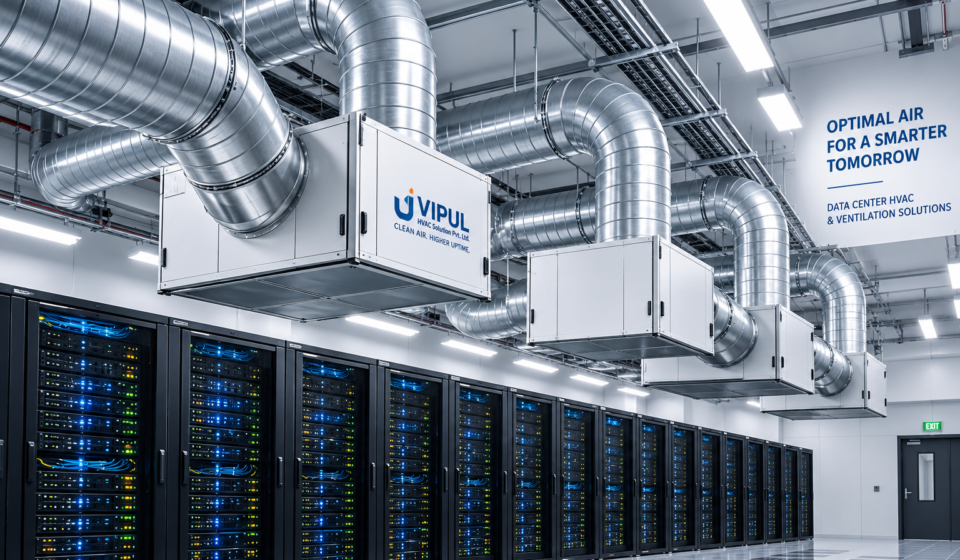
A Fresh Air Ventilation System for Data Center is an important part of a modern data center’s HVAC and environmental-control strategy. Unlike conventional commercial buildings, data centers operate continuously and contain high-density IT equipment that generates substantial heat. Therefore, ventilation and HVAC systems must be carefully designed to maintain suitable temperature, humidity, air quality, airflow and equipment inlet conditions.
A data center ventilation strategy may include fresh-air intake, filtration, exhaust, pressurization, air distribution, economization, energy recovery and intelligent controls. However, the data hall itself is primarily a controlled technology environment, so outdoor-air ventilation should not be treated as a simple replacement for the dedicated cooling system.
ASHRAE’s current standards and guidance specifically address data-center energy performance, cooling equipment and thermal conditions. ASHRAE lists Standard 90.4-2025, Energy Standard for Data Centers, as a current published standard, while its data-center guidance emphasizes matching cooling capacity to actual IT heat loads and maintaining appropriate equipment inlet conditions.
What Is a Fresh Air Ventilation System for a Data Center?
A fresh air ventilation system for a data center is an engineered system that introduces controlled outdoor air into appropriate areas of a data center and removes or exhausts air where required.
The system may be designed to support:
- Indoor air quality
- Building pressurization
- Moisture control
- Contaminant management
- Equipment-room ventilation
- Economizer operation where suitable
- Energy recovery
- Support-space ventilation
- Fire and smoke-management strategies where applicable
A simplified concept is:
Outdoor Air → Fresh Air Intake → Filtration → Air Treatment → Controlled Supply → Designated Space → Return/Exhaust → Discharge
The exact arrangement depends on the data-center architecture, climate, IT load, cooling technology, redundancy requirements and applicable standards.
Why Is Fresh Air Ventilation Important in Data Centers?
Data centers have unique HVAC requirements because IT equipment operates continuously and reliability is critical.
1. Continuous Operation
Unlike an ordinary office, a data center may operate 24 hours a day, 365 days a year.
HVAC and ventilation systems therefore need to be designed for continuous operation and appropriate redundancy.
2. High Heat Loads
Servers, networking equipment, storage systems, UPS equipment and other electrical systems generate heat.
ASHRAE notes that effective Datacom cooling design requires a realistic assessment of the heat released by IT equipment so cooling capacity can be matched to the actual thermal load.
3. Air Quality and Contamination Control
Outdoor air can contain:
- Dust
- Particulate matter
- Moisture
- Pollutants
- Corrosive contaminants
Therefore, simply bringing outside air directly into a data hall is not an appropriate generic solution. Outdoor air should be treated and filtered according to the environmental requirements of the facility.
4. Building Pressurization
Controlled outdoor air can help maintain appropriate pressure relationships in certain data-center areas.
This can help reduce uncontrolled infiltration through doors, gaps and building-envelope leakage.
5. Energy Efficiency
Where climate and system design permit, ventilation and economizer strategies can reduce mechanical cooling demand.
ASHRAE’s current AI data-center guidance emphasizes airflow optimization, containment, economization, energy recovery and intelligent controls as important strategies for improving thermal and energy performance.
Fresh Air Ventilation vs Data Center Cooling
This is one of the most important points to understand.
Fresh-air ventilation and data-center cooling are not the same thing.
A ventilation system primarily manages outdoor-air exchange and air quality, while the cooling system removes the large heat load generated by IT equipment.
| Feature | Fresh Air Ventilation | Data Center Cooling |
|---|---|---|
| Primary purpose | Controlled outdoor-air exchange | Remove IT heat |
| Outdoor air | Main component | May be limited or controlled |
| Heat removal | Limited/condition-dependent | Primary function |
| Filtration | Important | Important |
| Humidity control | May be included | Critical |
| Pressurization | Can support | Can be integrated |
| CRAH/CRAC | Not necessarily | Common cooling equipment |
| Chiller | Not necessarily | Frequently used |
| Liquid cooling | No | Applicable to high-density systems |
| Economizer | May be part of strategy | Can reduce mechanical cooling |
| BMS/DCIM | Can be integrated | Essential for monitoring/control |
Therefore, a data center may require a combination of:
CRAC/CRAH + Chiller/DX + Fresh Air System + Exhaust + Filtration + Controls + Airflow Management
Main Components of a Data Center Fresh Air Ventilation System
A properly engineered system can include several components.
1. Fresh Air Intake
The outdoor-air intake should be positioned and designed to reduce the risk of drawing in:
- Exhaust fumes
- Dust
- Contaminated air
- Vehicle emissions
- Hot exhaust air
- Other undesirable pollutants
Intake location is therefore an important part of the engineering design.
2. Fresh Air Handling Unit – FAHU
A Fresh Air Handling Unit (FAHU) can be used to condition outdoor air before it enters the building.
Depending on project requirements, it may contain:
- Pre-filters
- Fine filters
- Cooling coil
- Heating coil
- Dehumidification
- Humidification
- Fan
- Dampers
- Sensors
- Controls
For data-center support areas, a FAHU can provide controlled outdoor air without relying on uncontrolled infiltration.
3. Air Filters
Filtration is particularly important when introducing outdoor air into a critical facility.
Filters may help control:
- Dust
- Outdoor particulates
- Fine particles
- Airborne contaminants
The filter selection should consider:
- Outdoor air quality
- Required filtration efficiency
- Pressure drop
- Fan capacity
- Maintenance requirements
- Equipment manufacturer requirements
4. Exhaust Fans
Exhaust systems may be required for:
- Battery rooms
- Electrical rooms
- Generator areas
- Toilets
- Workshops
- Maintenance areas
- Other support spaces
The exhaust system must be designed according to the specific application.
For example, battery-room ventilation can have safety requirements that differ substantially from normal office ventilation.
Data Center Airflow Management
Fresh air alone does not guarantee effective thermal management.
Airflow management is critical.
Data-center cooling design should control the movement of supply and return air so that conditioned air reaches IT equipment without excessive mixing or bypass airflow.
Common strategies include:
- Hot aisle / cold aisle configuration
- Cold aisle containment
- Hot aisle containment
- Raised-floor supply
- Overhead supply
- Return-air plenums
- CRAH/CRAC airflow control
- Variable-speed fans
- Rack-level monitoring
ASHRAE’s AI Data Center Energy Performance Framework specifically recommends containment, airflow optimization and minimizing bypass/recirculation as foundational measures for improving thermal and energy efficiency.
Hot Aisle and Cold Aisle in Data Centers
A common data-center airflow arrangement separates server supply and exhaust air.
Cold Aisle
Server fronts face the cold aisle.
Conditioned air is supplied to this area so that servers receive the required inlet conditions.
Hot Aisle
Server backs face the hot aisle.
Hot exhaust air from the servers is collected and returned to the cooling system.
This arrangement helps prevent hot and cold air from mixing unnecessarily.
Why Airflow Containment Matters
Without effective airflow management, conditioned air can bypass the IT equipment while hot exhaust air can recirculate toward server inlets.
This can lead to:
- Higher server inlet temperatures
- Reduced cooling efficiency
- Increased fan energy
- Uneven rack temperatures
- Cooling hotspots
- Higher operating costs
ASHRAE’s current AI data-center framework recommends full or partial containment and optimized airflow as foundational efficiency measures.
Temperature and Humidity Control in Data Centers
Data-center HVAC design must maintain environmental conditions suitable for IT equipment.
Temperature and humidity should be evaluated at the IT equipment inlet, not merely at a general room thermostat.
ASHRAE data-center guidance emphasizes maintaining Datacom equipment inlet conditions within appropriate recommended or allowable environmental envelopes.
Excessive humidity can contribute to:
- Condensation risk
- Corrosion
- Equipment reliability concerns
Very low humidity can increase concerns related to electrostatic discharge.
Therefore, HVAC design may require:
- Cooling
- Dehumidification
- Humidification
- Filtration
- Monitoring
- Control automation
Does a Data Center Need Fresh Air?
Yes, but the quantity and application depend on the facility design.
A data center should not simply introduce large amounts of outdoor air into the IT hall without evaluating:
- Outdoor temperature
- Outdoor humidity
- Air quality
- Contaminants
- Energy impact
- IT equipment requirements
- Building pressurization
- Cooling architecture
- Economizer strategy
- Applicable standards
Many data centers use controlled outdoor air primarily for appropriate building/support-space ventilation and pressurization, while the IT space is maintained by dedicated cooling systems.
Where outdoor air is used for economization, the system must be carefully engineered to protect equipment and maintain acceptable thermal conditions.
Fresh Air Ventilation and Economizer Cooling
An economizer can use favorable outdoor conditions to reduce mechanical cooling requirements.
For example, when outdoor conditions are suitable, a properly designed system may use increased outdoor-air exchange to assist cooling.
Potential benefits include:
- Reduced compressor operation
- Lower cooling energy
- Reduced operating cost
- Increased use of favorable outdoor conditions
However, economizer operation must consider:
- Outdoor temperature
- Humidity
- Air quality
- Particulate concentration
- Corrosive contaminants
- Control sequences
- IT equipment environmental limits
ASHRAE’s current data-center framework identifies airside, waterside and refrigerant-based economization as important low-energy cooling pathways.
Energy Recovery Ventilation for Data Centers
Energy Recovery Ventilation (ERV) can recover energy between suitable exhaust and incoming outdoor-air streams.
It can transfer:
- Sensible heat
- Latent heat, depending on technology
This can reduce the energy required to condition incoming outdoor air.
However, ERV selection for a data center must be application-specific. The designer must evaluate contamination risks and ensure the selected recovery technology is appropriate for the exhaust and intake streams.
ASHRAE’s AI data-center framework identifies ERV as a strategy that can be useful where outdoor air is required, particularly in offices and support areas.
Fresh Air Ventilation for Data Center Support Areas
Not every area in a data center has the same HVAC requirements.
Fresh-air ventilation may be particularly relevant to:
Office Areas
Employees require suitable indoor-air quality and thermal comfort.
Control Rooms
Ventilation can support comfortable and reliable working conditions.
Security Rooms
These areas may operate continuously and require controlled ventilation.
Electrical Rooms
Ventilation requirements depend on the equipment and heat load.
Battery Rooms
Specialized ventilation and safety requirements may apply depending on battery technology.
UPS Rooms
Heat removal and ventilation requirements depend on the equipment configuration.
Generator Rooms
Combustion air, heat rejection and exhaust systems require specialized engineering.
Maintenance Areas
Fresh-air supply and exhaust may be required based on activities and equipment.
Fresh Air Ventilation for High-Density AI Data Centers
Modern AI and HPC data centers are changing HVAC design.
High-density computing can generate significantly higher rack heat loads than traditional enterprise computing.
ASHRAE’s AI Data Center Energy Performance Framework highlights the transition toward GPU-centric computing and the resulting increase in power density and thermal-management requirements.
For very high-density deployments, traditional air cooling may not be sufficient by itself.
Possible technologies include:
- Direct-to-chip liquid cooling
- Rear-door heat exchangers
- Warm-water cooling
- Cooling distribution units
- Hybrid air/liquid cooling
- Immersion cooling
ASHRAE’s current framework discusses liquid cooling as a key architecture for high-density AI deployments and recommends matching cooling architecture to the data center’s density roadmap.
Important: Fresh-air ventilation remains a separate design consideration even when liquid cooling is adopted.
Data Center HVAC System Components
A complete data-center HVAC strategy can include:
CRAC Units
Computer Room Air Conditioning units provide precision cooling for IT spaces.
CRAH Units
Computer Room Air Handling units generally use chilled water to remove heat from data-center air.
Chillers
Central chilled-water systems can serve CRAHs and other HVAC loads.
FAHU
Fresh Air Handling Units treat outdoor air.
Exhaust Fans
Exhaust fans remove air from designated areas.
Pumps
Chilled-water and condenser-water systems may require pumps.
Cooling Towers / Dry Coolers
Heat rejection technology depends on the cooling architecture.
VFDs
Variable Frequency Drives allow fan and pump speed modulation according to demand.
BMS/DCIM
Building Management Systems and Data Center Infrastructure Management platforms can monitor and control HVAC and environmental conditions.
Data Center Fresh Air Ventilation and BMS
A modern data center should use intelligent monitoring wherever practical.
A BMS/HVAC automation system can monitor:
- Supply-air temperature
- Return-air temperature
- Rack inlet temperature
- Humidity
- Differential pressure
- Fan status
- Filter condition
- Chilled-water temperature
- Equipment alarms
- Energy consumption
Advanced data-center environments can also use:
- Real-time sensors
- Automated control loops
- Data analytics
- Digital twins
- Continuous commissioning
ASHRAE’s AI data-center framework specifically recommends intelligent controls, monitoring, digital twins and continuous commissioning for maintaining performance and adapting to changing workloads.
Energy Efficiency in Data Center Ventilation
Energy efficiency is especially important because HVAC systems can represent a substantial portion of a data center’s infrastructure energy consumption.
Important strategies include:
1. Airflow Optimization
Supply only the airflow required to maintain equipment conditions.
2. Containment
Reduce unwanted mixing between hot and cold air.
3. Variable-Speed Fans
Adjust fan speed according to actual demand.
4. Economization
Use favorable outdoor conditions where appropriate.
5. Energy Recovery
Recover energy from suitable exhaust streams.
6. Higher-Efficiency Cooling
Select efficient CRAH, CRAC, chiller and heat-rejection systems.
7. Intelligent Controls
Use sensors and control algorithms to respond to changing IT loads.
8. Preventive Maintenance
Dirty filters, coils and fans can reduce system efficiency.
PUE and Data Center HVAC Efficiency
PUE — Power Usage Effectiveness — is widely used as a data-center efficiency metric.
Conceptually:
PUE = Total Data Center Energy ÷ IT Equipment Energy
A lower PUE generally indicates that a greater proportion of the facility’s energy is being delivered to IT equipment rather than supporting infrastructure.
HVAC optimization can contribute to better overall data-center energy performance.
ASHRAE’s current AI data-center framework recommends tracking metrics such as PUE, WUE, CUE and other performance indicators as part of holistic data-center optimization.
Common Problems in Data Center Fresh Air Ventilation
Problem 1: Excessive Outdoor Air
Too much outdoor air can increase:
- Cooling load
- Humidity-control requirements
- Fan energy
- Filtration pressure drop
Problem 2: Insufficient Filtration
Poor filtration can allow outdoor particulate contamination into the facility.
Problem 3: Poor Airflow Distribution
Uneven airflow can create server hotspots.
Problem 4: Hot and Cold Air Mixing
Poor containment can cause conditioned air to mix with hot return air.
Problem 5: Incorrect Pressurization
Improper pressure relationships can increase uncontrolled infiltration.
Problem 6: No Rack-Level Monitoring
Room-level temperature measurements may not identify individual rack hotspots.
Problem 7: Oversized Equipment
Oversized HVAC systems can operate inefficiently at partial loads.
Problem 8: Poor Maintenance
Blocked filters, dirty coils and degraded fans can negatively affect system performance.
How to Design a Fresh Air Ventilation System for a Data Center
A professional design process should generally include:
Step 1 – Site Survey
Evaluate:
- Building
- Location
- Climate
- Existing HVAC
- Electrical infrastructure
- IT spaces
- Support spaces
Step 2 – IT Heat Load Assessment
Determine:
- Server load
- Rack density
- UPS load
- Networking equipment
- Lighting
- Occupancy
- Other heat sources
ASHRAE emphasizes the importance of correctly assessing projected IT heat release when designing datacom cooling systems.
Step 3 – Cooling Load Calculation
Calculate the required cooling capacity based on actual and projected loads.
Step 4 – Ventilation Calculation
Determine outdoor-air requirements for applicable spaces.
Step 5 – Airflow Strategy
Develop:
- Hot aisle/cold aisle
- Supply-air path
- Return-air path
- Containment
- Exhaust
- Pressurization
Step 6 – Equipment Selection
Select appropriate:
- FAHU
- CRAH
- CRAC
- Chiller
- Fans
- Pumps
- Filters
- Controls
Step 7 – Duct Design
Design fresh-air, return-air and exhaust ductwork.
Step 8 – Controls
Develop BMS and HVAC control sequences.
Step 9 – Testing & Balancing
Verify:
- Airflow
- Temperature
- Humidity
- Pressure
- Equipment performance
Step 10 – Commissioning
Commission the complete HVAC system before operational handover.
Data Center Ventilation Standards and Guidelines
Data-center HVAC design should be based on the standards and requirements applicable to the project.
Relevant ASHRAE resources include:
ANSI/ASHRAE Standard 90.4-2025
Energy Standard for Data Centers addresses energy-related requirements for data-center systems. ASHRAE currently lists the 2025 edition as a published standard.
ASHRAE Thermal Guidelines
ASHRAE TC 9.9 guidance addresses environmental conditions for data-processing equipment and provides frameworks for recommended and allowable operating conditions.
ANSI/ASHRAE Standard 127
This standard addresses testing and rating of cooling equipment used for data centers and other IT equipment spaces.
Important: The final engineering design should also consider applicable Indian codes, local regulations, fire and life-safety requirements, equipment manufacturers’ requirements, client specifications and the authority having jurisdiction.
Why Choose VIPUL HVAC Solution for Data Center Ventilation?
VIPUL HVAC Solution Pvt. Ltd. provides HVAC engineering and ventilation solutions for commercial and industrial applications.
For a data-center project, the HVAC scope can be developed around requirements such as:
- Fresh-air ventilation
- Supply and exhaust systems
- AHU/FAHU
- Chiller systems
- Precision cooling
- Ductwork
- Airflow balancing
- Filtration
- HVAC automation
- BMS integration
- Energy-efficiency optimization
- Preventive maintenance
The company’s ventilation solutions include fresh-air handling units, exhaust and supply fans, heat recovery, filters and dampers, VAV systems, airflow testing and balancing, and HVAC integration.
For a critical data-center environment, the final system should be customized according to IT load, rack density, cooling architecture, redundancy requirements, climate and applicable standards.
Why Professional Data Center HVAC Design Matters
A data center is a critical facility where HVAC performance directly supports IT equipment reliability.
Professional design helps coordinate:
IT Load → Cooling Capacity → Airflow → Temperature → Humidity → Ventilation → Filtration → Pressurization → Controls → Redundancy → Energy Efficiency
A mistake in one part of this chain can affect the overall system.
For example:
Poor airflow → Hotspots → Higher server inlet temperature → Cooling instability → Potential equipment reliability issues
This is why data-center HVAC design should be treated as an engineering discipline rather than a conventional air-conditioning installation.
Maintenance of Data Center Fresh Air Ventilation Systems
Preventive maintenance should include:
Filter Inspection
Check pressure drop and filter condition.
Fan Inspection
Check:
- Bearings
- Motors
- Belts
- Vibration
- Speed control
Coil Cleaning
Dirty coils can reduce heat-transfer performance.
Damper Inspection
Verify proper operation of fresh-air and exhaust dampers.
Sensor Calibration
Incorrect sensors can cause incorrect HVAC control.
Duct Inspection
Check for leakage, insulation damage and airflow issues.
Airflow Testing
Verify actual airflow against design requirements.
Temperature Monitoring
Monitor equipment inlet and room temperatures.
Humidity Monitoring
Ensure environmental conditions remain within the required operating envelope.
BMS Alarm Testing
Verify that critical alarms are generated correctly.
Fresh Air Ventilation System for Data Center: Key Benefits
A properly designed system can support:
- Better indoor air quality
- Controlled outdoor-air exchange
- Building pressurization
- Contaminant management
- Improved airflow management
- Energy efficiency
- Equipment protection
- Temperature and humidity control
- Better HVAC monitoring
- Improved operational reliability
Frequently Asked Questions
1. What is a fresh air ventilation system for a data center?
It is an engineered HVAC system that introduces controlled outdoor air and exhausts air from designated areas while supporting appropriate environmental and operational conditions.
2. Does a data center need fresh air?
Yes, appropriate ventilation is required for applicable occupied and support spaces, and outdoor air may also be used as part of certain economizer or pressurization strategies. The quantity and application must be determined through engineering analysis.
3. Is fresh air enough to cool a data center?
Usually, fresh-air ventilation should not be considered a substitute for dedicated data-center cooling. IT equipment produces significant heat, requiring appropriately designed cooling systems.
4. What HVAC system is best for a data center?
There is no single best system for every data center. Options can include CRAC, CRAH, chilled-water systems, DX systems, economizers, liquid cooling and hybrid systems depending on IT density, climate, redundancy and project requirements.
5. What is the role of FAHU in a data center?
A FAHU treats outdoor air before supplying it to designated spaces. It can provide filtration, cooling, heating, humidity control and controlled fresh-air supply.
6. Can ERV be used in a data center?
ERV can be appropriate for certain outdoor-air applications, particularly support spaces, when contamination risks and system requirements are properly evaluated. ASHRAE’s current AI data-center framework identifies ERV as a useful strategy where outdoor air is required.
7. What is hot aisle and cold aisle containment?
It is an airflow-management strategy that separates cool server-inlet air from hot server-exhaust air to reduce unwanted mixing.
8. Why is filtration important in a data center?
Filtration helps control outdoor particulate contamination entering the facility and can support the environmental requirements of sensitive IT equipment.
9. What is PUE in a data center?
PUE, or Power Usage Effectiveness, compares total data-center energy consumption with IT equipment energy consumption and is commonly used as an efficiency metric.
10. What is the importance of BMS in data-center HVAC?
BMS can monitor and control HVAC equipment, temperatures, humidity, alarms, energy consumption and other operating parameters.
11. Does AI data-center cooling require different HVAC planning?
High-density AI computing can create substantially higher rack heat loads. Depending on density, liquid cooling and other specialized thermal-management technologies may become important.
12. Can VIPUL HVAC Solution design ventilation for a data center?
VIPUL HVAC Solution can support data-center HVAC and ventilation requirements including fresh-air systems, AHU/FAHU, precision cooling, ductwork, airflow management, HVAC controls and maintenance, with the final scope determined according to the project’s engineering requirements.
Conclusion
A Fresh Air Ventilation System for Data Center should be designed as part of a complete environmental-control strategy rather than as an independent ventilation installation.
The right solution considers:
Fresh Air + Filtration + Cooling + Airflow Management + Humidity + Pressurization + Exhaust + Controls + Redundancy + Energy Efficiency
For conventional data centers, precision cooling and effective airflow management remain fundamental. For modern AI and high-density facilities, cooling architecture may also need to incorporate liquid cooling or other advanced technologies. ASHRAE’s current AI data-center guidance emphasizes optimized airflow, containment, economization, energy recovery, intelligent controls and cooling architectures matched to rack density.
For a new data center, expansion or HVAC retrofit, professional engineering design is essential to achieve the required reliability, efficiency and environmental performance.
Planning a fresh-air ventilation or complete HVAC system for your data center? Contact VIPUL HVAC Solution Pvt. Ltd. for customized HVAC engineering, ventilation, precision cooling, ductwork, controls and maintenance solutions.
Call: +91 8000392000
Email: info@vipulhvacsolution.in
Important Links:
- Fresh air ventilation system for data center
- Data center ventilation system
- Data center HVAC system
- Data center cooling system
- Data center fresh air system
- Data center HVAC design
- Data center ventilation design
- Data center air conditioning
- Data center AHU system
- Data center FAHU system
- Data center CRAC system
- Data center CRAH system
- Data center precision cooling
- Data center airflow management
- Data center HVAC contractor
- Data center cooling solutions
- AI data center cooling
- Data center indoor air quality

Vipul HVAC House
At Vipul hvac solution pvt.ltd., we take great pride in delivering high-quality HVAC solutions that ensure comfort and efficiency in both residential and commercial spaces. As a trusted HVAC of reliable, energy-efficient systems, and we are dedicated to providing you with the best products and services to meet your needs