
What Happens If an AC Runs Without Gas? 7 Critical Risks
An air conditioner is designed to cool indoor spaces by circulating refrigerant through a sealed refrigeration system. In India, many people commonly call this refrigerant “AC gas.” It is essential for transferring heat from inside a room to the outdoor environment.
But what happens if an AC runs without gas? Will the air conditioner stop working immediately? Can the compressor get damaged? Will the electricity bill increase? And is it safe to continue using the AC if it is not cooling properly?
The answer depends on how much refrigerant has escaped, the type of air conditioner, the operating conditions and the protection systems built into the equipment. An AC with no refrigerant cannot provide normal refrigeration, while an AC with insufficient refrigerant may continue running without delivering the expected cooling performance.
Operating an air conditioner with a refrigerant shortage can lead to evaporator icing, reduced cooling capacity, abnormal operating conditions and possible compressor damage.
In this guide, VIPUL HVAC SOLUTION PVT. LTD. explains the seven major risks of running an AC without sufficient gas, the warning signs of refrigerant leakage, what you should do and how professional servicing can help protect your air conditioning system.
What Does It Mean When an AC Has No Gas?
When people say an AC has no gas, they generally mean that the refrigerant charge is very low or has been completely lost because of a leak, installation problem or service-related issue.
Refrigerant is not normally consumed like petrol or diesel. A properly installed, sealed air conditioning system should retain its refrigerant during normal operation. If the charge becomes low, the cause should be investigated rather than simply adding more gas.
The refrigerant absorbs heat at the indoor evaporator and releases that heat through the outdoor condenser in a conventional split AC operating in cooling mode. The compressor circulates refrigerant through this cycle.
When the refrigerant charge is incorrect, the system may not transfer heat effectively. Depending on the equipment and the severity of the problem, the compressor may overheat, protective controls may stop it, or the system may continue operating abnormally.
Important: Low cooling does not automatically mean the AC has a gas leak. Dirty filters, blocked coils, fan problems, electrical faults, incorrect settings and other refrigeration-system issues can produce similar symptoms.
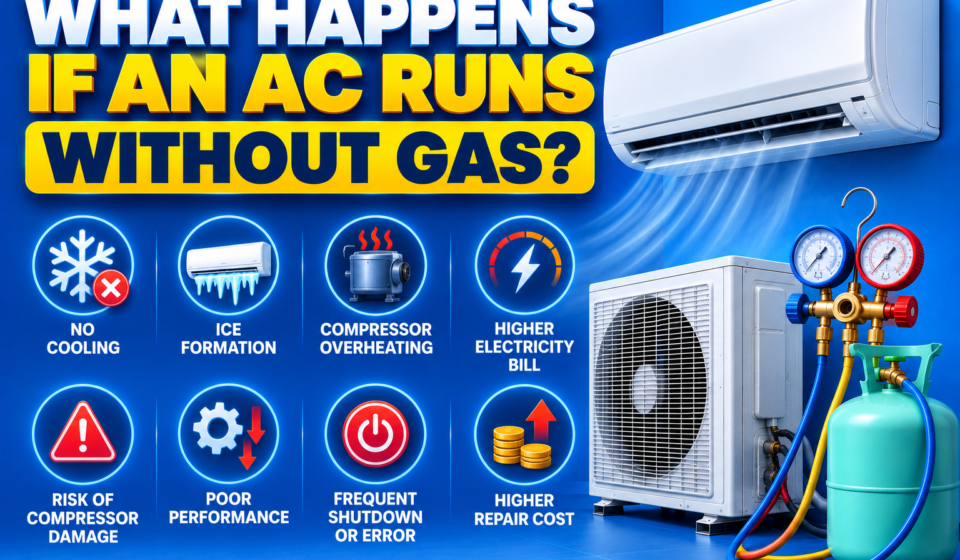
What Happens If an AC Runs Without Gas? 7 Major Risks
1. The AC Stops Cooling Properly
The most noticeable result of insufficient refrigerant is reduced cooling performance.
The indoor unit may continue blowing air, but the air may not feel sufficiently cold. The room can take longer to reach the desired temperature, and the AC may run for extended periods without providing the expected comfort.
If the refrigerant charge is completely lost, the system cannot perform normal refrigeration. Some models may stop automatically when their protection controls detect abnormal conditions, while others may continue operating for a period.
What to do: Turn off the cooling operation if a refrigerant shortage is suspected and arrange a professional inspection.
2. The Evaporator Coil May Freeze
A low refrigerant charge can cause abnormal evaporator operating conditions and, in some systems, lead to ice formation on the indoor coil.
Restricted airflow caused by a dirty filter or faulty indoor fan can also cause the evaporator to freeze. Therefore, ice is a warning sign, not proof of a refrigerant leak.
When the coil freezes, airflow and heat transfer can deteriorate further. After the AC is switched off, melting ice may produce water around the indoor unit or drain system.
What to do: Stop cooling operation and allow the ice to thaw naturally. Do not chip the ice away or attempt to dismantle the unit. Have a qualified technician check the airflow and refrigeration system before restarting it.
3. The Compressor May Overheat or Become Damaged
The compressor is one of the most important and potentially expensive components of an air conditioner.
Incorrect refrigerant charge can disturb the system’s normal operating conditions. Depending on the design, a low charge may reduce compressor cooling, affect oil return or cause abnormal operating temperatures.
If the AC continues operating under these conditions, the compressor may suffer damage. However, compressor failure is not inevitable every time a system loses refrigerant; some units have protective controls that stop operation before serious damage occurs.
What to do: Do not repeatedly restart an AC that is showing refrigerant-related faults. Have the cause diagnosed before operating it again.
4. The AC May Consume More Electricity for Less Cooling
An AC with insufficient refrigerant may run longer to reach the selected temperature. Extended operating time can increase electricity consumption while delivering less cooling.
The actual electricity usage depends on the type of AC, outdoor temperature, room heat load, airflow, compressor controls and the severity of the refrigerant shortage.
It is therefore not possible to calculate an exact increase in electricity cost from low refrigerant alone.
What to do: If the AC runs continuously but the room remains warm, check the air filter and settings, and arrange a professional diagnosis if the problem persists.
5. The AC May Shut Down or Display an Error Code
Modern inverter and conventional air conditioners may include temperature sensors, pressure protection devices, compressor overload protection or electronic fault detection.
When abnormal operating conditions occur, these controls may reduce compressor output, stop the compressor or display an error code. The exact response varies by manufacturer and model.
Not every AC has the same protection features, and the absence of an error code does not prove that the refrigerant charge is correct.
What to do: Note the error code and refer to the manufacturer’s manual. A qualified technician should investigate the underlying fault instead of repeatedly resetting the system.
6. Cooling Performance Becomes Unstable
A refrigerant shortage may cause inconsistent cooling, unusually long running cycles or changing performance as operating conditions vary.
The symptoms depend on the refrigeration circuit, expansion device, outdoor conditions and amount of refrigerant remaining.
Similar problems can also result from a dirty condenser, restricted airflow, a faulty sensor or a refrigeration-system restriction.
What to do: Have the complete system checked, including the indoor and outdoor coils, fans, refrigerant circuit and controls.
7. Repair Costs May Increase if the Problem Is Ignored
A refrigerant leak may initially be a repairable problem. If the AC continues operating under abnormal conditions, however, additional components may be affected.
For example, a system that develops a significant leak may experience poor cooling first and more serious compressor or refrigeration-circuit problems later. This outcome is possible, but not guaranteed.
Adding refrigerant without repairing an existing leak may provide only temporary relief. The refrigerant can escape again, leaving the original problem unresolved.
What to do: Arrange leak detection and repair promptly. The technician should verify the cause, repair the leak, carry out the required evacuation and recharge procedure, and test the system according to the manufacturer’s instructions.
Symptoms of Low Gas in an AC
The following signs may indicate a refrigerant problem, although none of them confirms a leak on its own.
| Symptom | Possible explanation |
|---|---|
| AC blowing warm or mildly cool air | Low refrigerant, airflow restriction or another system fault |
| Room takes too long to cool | Incorrect refrigerant charge, dirty coils or excessive heat load |
| Ice on indoor coil or refrigerant pipe | Low refrigerant or restricted airflow |
| AC runs for long periods | Insufficient capacity, high room load or control issue |
| Compressor repeatedly stops | Protective shutdown, electrical fault or abnormal operating conditions |
| Hissing sound near refrigerant piping | Possible leak or another pressure-related sound |
| Water dripping after ice melts | Frozen evaporator or drainage problem |
Do not rely on one symptom alone. A trained technician should check the equipment and confirm the cause.
Can You Run an AC With Low Gas?
It is not recommended to continue operating an AC when a refrigerant shortage is suspected.
A system with a slightly low charge may still run, but that does not mean continued operation is safe or efficient. A more severe shortage can cause rapid loss of cooling, abnormal temperatures, icing or protective shutdown.
There is no universal safe number of hours for running an AC with low refrigerant. The risk depends on the amount of refrigerant remaining, the equipment design, the operating load and the protection controls.
If the AC is not cooling and a refrigerant leak is suspected, switch off cooling mode and arrange qualified service. If there is visible damage, a significant leak or an unusual hissing sound, keep away from the suspected leak and follow the manufacturer’s safety instructions.
What Should You Do If Your AC Has No Gas?
Follow these practical steps to protect the equipment.
Step 1: Stop Operating the AC in Cooling Mode
If you strongly suspect a refrigerant leak or the unit is icing, stop cooling operation. Do not keep the compressor running to see whether the cooling improves.
Step 2: Check Basic, Safe Items
You can check the thermostat setting, remote-control mode and accessible air filter. Clean the filter according to the manufacturer’s instructions if needed.
Do not open refrigerant lines, remove electrical covers or attempt to connect charging equipment yourself.
Step 3: Contact a Qualified AC Technician
Explain the symptoms, when they began and whether the unit displays an error code. Share the AC model and refrigerant information if available.
Step 4: Ask for Leak Detection
The technician should inspect the refrigerant circuit, including accessible joints, service valves, coils and piping, using suitable leak-detection methods.
Step 5: Repair the Leak Before Recharging
If a leak is confirmed, it should be repaired before the refrigerant charge is restored. Simply topping up the refrigerant without addressing the leak is not a reliable long-term solution.
Step 6: Recharge According to Manufacturer Specifications
The technician should use the correct refrigerant type and charging procedure for the particular model. The required charge may depend on the factory specification and any additional piping requirements.
Mixing refrigerants or using an incorrect refrigerant can damage the equipment and create safety risks.
Step 7: Test the AC After Repair
After service, the technician should verify cooling performance, operating conditions, airflow and the relevant manufacturer-recommended checks.
Does AC Gas Need to Be Refilled Every Year?
No. An air conditioner does not normally require an annual refrigerant refill if its sealed circuit is intact and the system is operating correctly.
Refrigerant circulates through the system rather than being consumed during normal cooling. A shortage usually indicates leakage, a previous charging error or another service-related issue.
Routine maintenance should focus on cleaning filters and coils, checking airflow, inspecting components and identifying faults. Refrigerant should be measured and adjusted when testing indicates that it is necessary.
Avoid accepting an automatic annual gas refill without a proper diagnosis.
Is It Safe to Add AC Gas Without Repairing a Leak?
No. If the system has a confirmed leak, adding refrigerant without correcting the leak does not solve the underlying problem.
The charge may become low again, cooling performance may deteriorate, and continued operation under abnormal conditions may damage equipment.
A proper service procedure should identify the leak, repair it, complete the required evacuation and charging steps, and confirm that the system operates correctly.
Refrigerant handling should be performed by a trained professional using equipment and procedures appropriate for the refrigerant. Some refrigerants are mildly flammable, so the correct safety precautions are essential.
How to Prevent AC Gas Leakage
Preventive maintenance can help identify potential problems before they lead to major cooling failures.
- Schedule periodic AC inspection according to the manufacturer’s recommendations.
- Ensure that refrigerant piping and joints are installed correctly.
- Avoid physical damage to exposed copper piping and outdoor-unit connections.
- Keep the indoor filter and heat-exchanger surfaces clean.
- Ensure that the outdoor unit has adequate ventilation.
- Investigate recurring low-cooling complaints rather than repeatedly topping up refrigerant.
- Use the refrigerant specified on the unit’s nameplate.
- Keep records of leak repairs, refrigerant charging and service visits.
- Use qualified technicians for installation, maintenance and refrigeration work.
Good maintenance cannot eliminate every possible leak, but it can help identify problems and reduce the risk of prolonged operation with an incorrect refrigerant charge.
AC Gas Leakage and Professional HVAC Service from VIPUL HVAC SOLUTION PVT. LTD.
VIPUL HVAC SOLUTION PVT. LTD. supports residential, commercial and industrial HVAC requirements, including air conditioning solutions, HVAC installation, maintenance and project-related services.
Whether you are experiencing poor cooling in a split AC or investigating a refrigerant-related issue in a larger air conditioning system, accurate diagnosis is important. The correct repair depends on the equipment type, refrigerant, fault symptoms and manufacturer’s service requirements.
For HVAC service enquiries and project assistance, contact our team.
VIPUL HVAC SOLUTION PVT. LTD.
- Phone: +91 8000392000
- Email: info@vipulhvacsolution.in
- Website: https://vipulhvacsolution.in/
- Branch directory: https://vipulhvacsolution.in/our-branches/
- Contact page: https://vipulac.in/contact-us/
Our Gujarat Locations
We serve customers and project requirements through our listed Gujarat locations:
- Surat — Head Office
- Ankleshwar
- Bharuch
- Vadodara (Baroda)
- Ahmedabad
- Talala
- Junagadh
- Vapi
For branch-specific details and assistance, visit our official branch directory or contact the central sales team.
Frequently Asked Questions About Running an AC Without Gas
1. What happens if an AC runs without gas?
An AC without sufficient refrigerant cannot provide normal cooling. Depending on the severity of the shortage and the equipment design, it may experience poor performance, evaporator icing, abnormal compressor operation or protective shutdown.
2. Can an AC compressor run without gas?
Some air conditioners may continue running for a period when refrigerant is very low, while others may stop through protective controls. Operating with an incorrect charge can damage the compressor, so the unit should be inspected if a leak is suspected.
3. Will an AC stop automatically if gas is low?
Not always. Some models have controls that detect certain abnormal operating conditions, but not every unit can directly detect a low refrigerant charge. Never assume that the absence of an error code means the AC is safe to operate.
4. Does low AC gas increase electricity consumption?
It can. Reduced cooling capacity may cause longer operating cycles and greater electricity use for the cooling delivered. The actual impact depends on the equipment and operating conditions.
5. Can low gas cause ice on the indoor AC unit?
Yes, insufficient refrigerant can contribute to evaporator icing. However, dirty filters, restricted airflow and fan problems can also cause ice formation. The underlying cause must be identified before the AC is returned to normal operation.
6. How do I know if my AC gas is low?
Poor cooling, long running cycles and ice on the coil or refrigerant piping may indicate a refrigerant problem. These signs are not conclusive; a technician should inspect the system and verify the refrigerant charge using the correct diagnostic procedure.
7. How often should AC gas be refilled?
There is no fixed annual refill schedule for a properly sealed system. Refrigerant should be added when diagnosis confirms that the charge is insufficient, after the cause has been investigated and any leak has been repaired.
8. Can I refill AC gas myself?
Refrigerant charging requires suitable tools, correct refrigerant identification and manufacturer-specific procedures. Incorrect charging can damage the system and create safety risks. Use a qualified AC technician.
9. Should I switch off an AC if it is not cooling?
If the AC is not cooling and a refrigerant leak or evaporator icing is suspected, stop cooling operation and arrange professional inspection. If the cause is a simple settings or filter issue, the appropriate correction may resolve it, but persistent symptoms require diagnosis.
10. Where can I get HVAC assistance in Gujarat?
VIPUL HVAC SOLUTION PVT. LTD. serves HVAC requirements through locations including Surat, Ankleshwar, Bharuch, Vadodara, Ahmedabad, Talala, Junagadh and Vapi. Call +91 8000392000 or visit https://vipulhvacsolution.in/ for assistance.
Conclusion
Running an air conditioner without sufficient refrigerant can result in poor cooling, longer operating cycles, evaporator icing, protective shutdown and possible compressor damage. The severity depends on the amount of refrigerant lost and the design of the equipment.
The best approach is to stop operating the AC when a refrigerant leak is suspected, arrange professional diagnosis, repair any confirmed leak and restore the correct charge according to the manufacturer’s specifications.
Remember, AC gas is not normally consumed during operation, so repeated refilling without finding the cause is not a proper solution.
For HVAC enquiries and project assistance, contact VIPUL HVAC SOLUTION PVT. LTD. at +91 8000392000 or visit https://vipulhvacsolution.in/.
Technical references
These sources support the key maintenance and safety guidance in the article:
- LG India explains that refrigerant does not need refilling when there is no leakage and recommends professional service when a shortage is suspected.
- Daikin’s installation guidance advises against continued operation when refrigerant leakage is suspected and recommends contacting qualified service personnel
- The U.S. Department of Energy discusses how refrigerant leakage can reduce cooling capacity and efficiency.